How to make the perfect smoothie
Always start with the base. If you add the liquid first to your blender it will stop the blade from getting damaged. Good bases include fruit and vegetable juices, nut drinks, soya drinks, coconut water, yoghurts or milk. Some people prefer to use plain water (particularly if their ingredients are particularly strong tasting or thick). Milk, cream and yoghurts made from coconut are increasingly popular to add to smoothies.
Your base should make up just over 2/3 of your smoothie. The remainder of your smoothie should be fruit or vegetables, with some ice cubes and perhaps a spoonful of honey or agave to sweeten it up. Do play around with proportions, some people like incredibly thick and creamy smoothies, others prefer drinks that are more like juice, the only way you’ll find out is to mess around until you find your favourites.
Try this great super boosting juice...
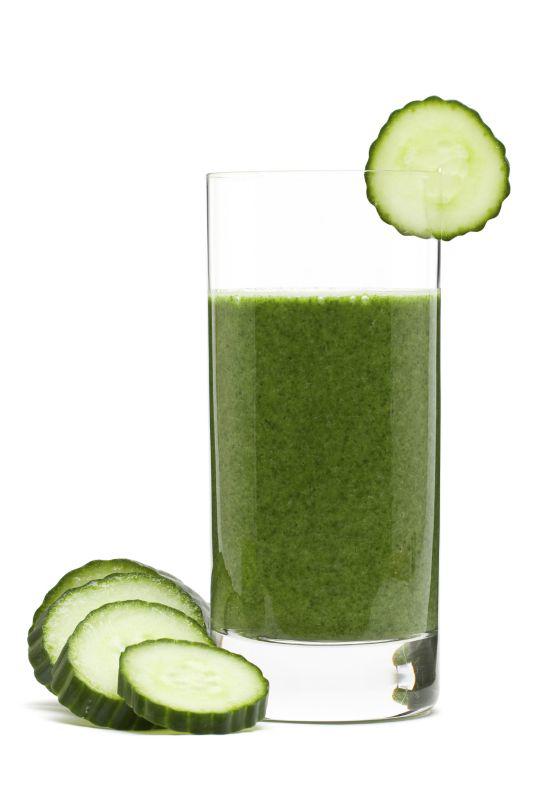
All you need are the following ingredients:
And all you need to do is...
-
Juice the apples and cucumber
-
Mix the juice with the coconut water
-
Add the wheatgrass and give the mix a good shake for 15 seconds or so.
Top tips for smoothies
-
Be sure to wash your fruit thoroughly before juicing to remove and pesticides that may remain, better still, use organic fruit and veg. and avoid pesticides altogether!
-
It’s a good plan to use coconut water or milk for tropical smoothies as it complements fruits like pineapple, mango or orange
-
Use frozen fruit. That way you won’t need to add ice as they will already chill your smoothie sufficiently. It’s a great way of making sure you don’t waste often costly fruit. If your bananas are about to turn brown, simply peel and slice them and freeze on baking parchment, then you can add as little or as much as you like. Keep an eye out for deals on fruit (fresh or frozen) and freeze when you get them home, to use when you need. Many people puree the fruit into ice cube trays so they can add exactly the amount they need
-
Add oats to your smoothie. Oats are packed with fibre and protein and are proven to help lower LDL (or ‘bad’) cholesterol levels due to their high beta-glucan content. Simply add a handful to your blender and gain the benefits! Oats can be further improved by soaking them, this neutralises the phytic acid in their outer layer which has been linked to blocking the absorption of some minerals. The easiest way is to soak the oats in kefir or natural yoghurt (or a little warm water and a tiny pinch of yoghurt) overnight. They’re ready to be blended the next day
-
Leave your juicer or blender set up on your kitchen work top. It will remind you to juice and is a lot more convenient than having to heave it out of a cupboard (most juicers weigh a reasonable amount). With it always at the ready you will be more likely to start (or continue) some healthy habits
-
Once you have put your ingredients through your juicer or blender, you should drink your juice as soon as possible to prevent the loss of any nutrients
-
Grapefruit and Orange skins contain toxic substances so make sure you don’t juice these skins although juicing the white pith is normal as the pith contains high levels of vitamin C and bioflavonoids
Favourite Real Foods' Juices Include:
Some prefer to juice vegetables rather than fruit because eating whole raw fruit is a lot easier and tastier than eating whole raw vegetables.
Some have put forward arguments for juicing vegetables rather than fruits on the fact that vegetables tend to be contain harder to break down fibres than fruits and as such the nutritional value of fruits is less ‘locked away’ than in vegetables.
Why not resolve the argument by juicing both!
Favourite Real Foods Smoothies Include:
Berry Breakfast – a good start to the day
Why I like Smoothies!
Smoothies benefit us in a different way from juices because smoothies contain the whole fruit, not just the juice. This means that smoothies contain the fibrous matter of the fruit and as such are good sources for our required dietary intake of fibre. Fibre helps aid digestion.
Some fruits with a low water content are not as suitable for juicing and are better being broken down in a blender and made into smoothies. Fruits that should be prepared in the blender include bananas, avocado and papayas.
There is great potential for adding a massive amount of extra healthy goodness into your smoothie. There are many extra food types that can be added to your smoothie to give you that extra lift, be it a power smoothie, energy smoothie, immune system boosting smoothie etc.
Some commonly used and great ideas for healthy smoothie ingredients include:
· Wheatgerm - high in fibre, a good source of vitamin E and Folic acid
· Tahini - A sesame seed paste
To add protein to your smoothie
If you’re having a smoothie as your breakfast or lunch, it’s a good idea to add some protein to the mix to give a good boost of energy.
Non dairy nut drinks are a great way of getting some healthy fats and protein into your drink. They also make beautifully creamy smoothies, ideal if you’re mixing a sharp tasting fruit or earthy vegetable to the mix.
Adding a spoonful of protein powder is easy. Try whey, rice, pea or hemp protein powder (find them here in our webshop).
Alternatively adding a spoonful of nut butter (find peanut butter here, find other nut butters here), seed spreads (try tahini) or some tofu and blending it will also add some high-quality protein to your smoothie.
Have a look at our infographic below for more ideas...